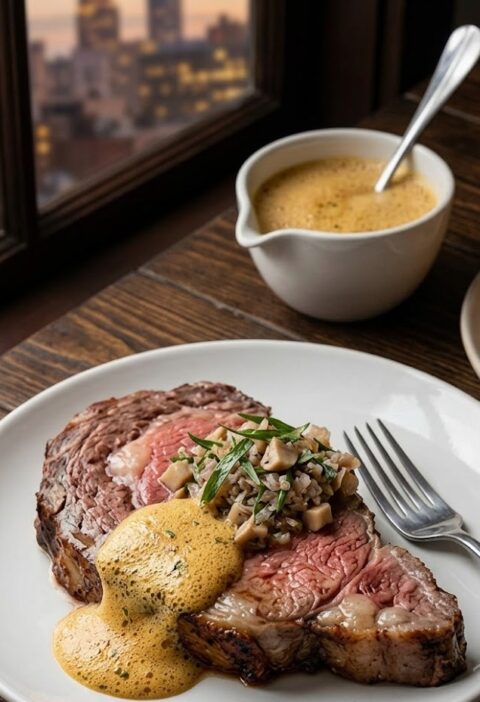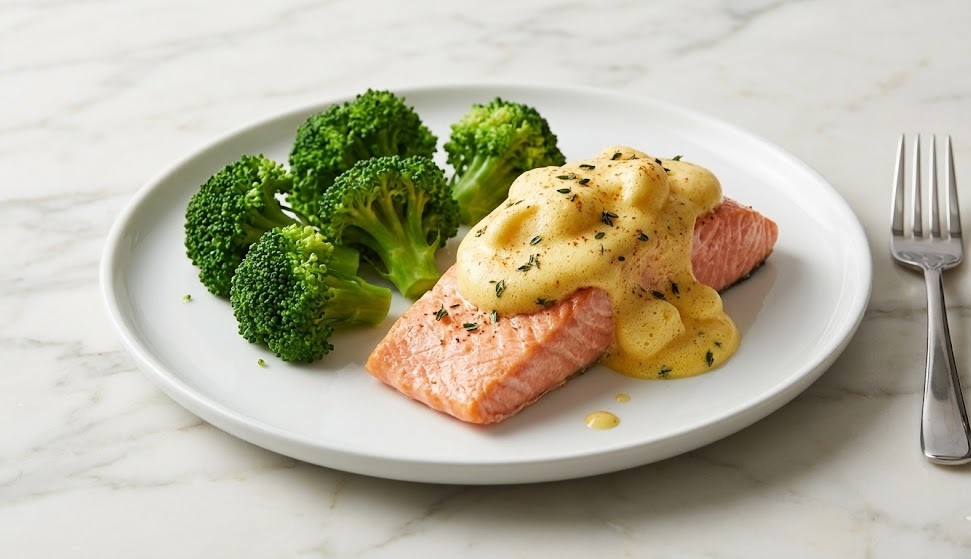
This classic hollandaise sauce is rich, silky, and buttery with a bright lemon finish that lifts everything it touches. It has that signature glossy texture that feels restaurant-worthy, yet it’s completely doable at home with a bowl, a whisk, and a gentle heat. I’d call it medium difficulty, mainly because the key is patience and low heat rather than fancy skills. Total time is about 15 to 20 minutes, and it’s best served straight away.
Ingredients
For the hollandaise sauce
- 3 large egg yolks
- 150g unsalted butter
- 1 tbsp lemon juice, plus extra to taste
- 1 tsp white wine vinegar (or tarragon vinegar)
- 1 tbsp water
- 1/4 tsp fine salt, then adjust to taste
- A pinch of white pepper
- A pinch of cayenne pepper (optional, for gentle warmth)
Optional, for serving
- Poached eggs and toasted muffins (for eggs Benedict)
- Steamed asparagus or tenderstem broccoli
- Grilled salmon, smoked salmon, or roasted fish
How to Make Mary Berry Classic Hollandaise Sauce Recipe
- Prepare the “oven” (your heat source): Set a small saucepan over a low heat and bring it to a very gentle simmer. You want a few lazy bubbles, not a rolling boil. Place a heatproof bowl on top so it sits snugly, and make sure the base of the bowl does not touch the water.
- Melt the butter: Melt the butter in a small pan over low heat, then take it off the heat. Keep it warm but not piping hot. (If you like, let it stand for 2 minutes and pour off the clear yellow butter, leaving the milky solids behind for an even smoother sauce.)
- Mix the yolk base: Add the egg yolks, vinegar, and water to the heatproof bowl. Whisk constantly for 30 to 60 seconds until combined and slightly frothy.
- “Bake” (cook) gently until thickened: Keep whisking over the gentle heat until the yolks turn paler and thicken to a light ribbon. This usually takes 2 to 4 minutes. If the bowl feels too hot at any point, lift it off the pan for a few seconds while you whisk, then return it.
- Cool slightly, then emulsify: Take the bowl off the heat. While whisking briskly, add the warm melted butter in a slow, thin stream. Go slowly at the start so the sauce emulsifies properly, then you can pour a little faster once it looks glossy and stable.
- Assemble (finish) the flavour: Whisk in the lemon juice, salt, white pepper, and cayenne (if using). If the sauce is too thick, whisk in warm water 1 teaspoon at a time until it’s spoonable and silky.
- Hold warm and serve: Serve straight away for the best texture. If you need a little time, keep the bowl over warm (not hot) water for up to 30 minutes, giving it a quick whisk now and then.
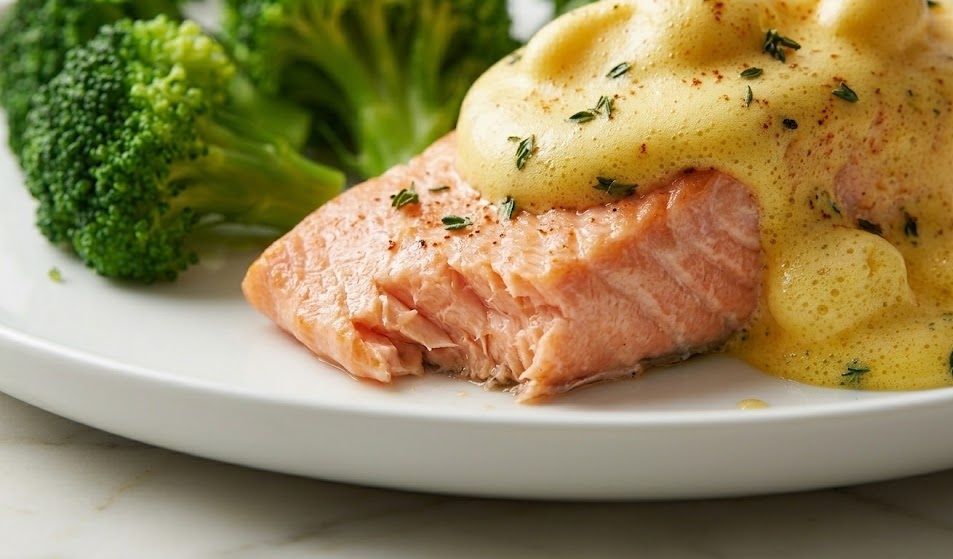
Tips
Why did my hollandaise split?
This usually happens if the butter goes in too quickly or the yolks get too hot. To fix it, whisk 1 fresh egg yolk in a clean bowl, then slowly whisk in the split sauce a spoonful at a time until it comes back together.
How do I stop the egg yolks scrambling?
Keep the water at a gentle simmer and whisk constantly. If you feel the bowl getting very hot, lift it off the pan for a few seconds while you whisk, then return it. Low heat and movement are everything here.
My hollandaise is too thick. How do I loosen it?
Whisk in warm water, 1 teaspoon at a time, until it relaxes into a smooth, pourable sauce. Lemon juice can also thin it slightly, but water gives you control without making it sharper.
My hollandaise tastes flat. What should I add?
A pinch more salt and an extra squeeze of lemon usually wakes it up. If you enjoy a gentle edge, add a tiny pinch of cayenne or use tarragon vinegar for a classic eggs Benedict-style flavour.
Serving Suggestions
- Drizzle over poached eggs and toasted English muffins for eggs Benedict or eggs Royale.
- Spoon over steamed asparagus, tenderstem broccoli, or artichokes.
- Serve with grilled salmon, roasted cod, or pan-fried sea bass.
- Use as a shortcut “posh finish” for roasted potatoes or sautéed spinach.
Storage
Room temperature
Hollandaise is best made fresh. You can hold it warm for up to 30 minutes, or keep it at cool room temperature for up to 1 hour. For food safety, don’t leave it out longer than that.
Refrigerator
If you have leftovers, cool quickly and store in an airtight container in the fridge for up to 24 hours. Reheat very gently in a heatproof bowl over warm water, whisking constantly, and add a splash of warm water to bring it back to life. Avoid high heat or it can split.
Freezing
Freezing is not recommended. The emulsion tends to break once thawed, and the texture won’t be the same.
Nutrition
- Calories: 311 kcal
- Carbohydrates: 1 g
- Protein: 3 g
- Fat: 34 g
- Saturated fat: 20 g
- Sodium: 220 mg
Disclaimer: Nutrition values are estimates and will vary depending on the exact ingredients and portions used.
FAQs
Can I make hollandaise sauce without a double boiler?
Yes. Use a heatproof bowl set over a saucepan of gently simmering water. The key is that the bowl should not touch the water, and the heat should stay low so the yolks thicken without scrambling.
How do I fix a split hollandaise sauce?
Whisk 1 fresh egg yolk in a clean bowl, then slowly whisk the split sauce into it a spoonful at a time until it emulsifies again. If it’s very thick, add a teaspoon of warm water to help it come back together.
Can I make hollandaise in advance for eggs Benedict?
It’s best freshly made, but you can hold it warm for up to 30 minutes over warm water. If you must make it ahead, refrigerate up to 24 hours and reheat very gently while whisking, adding a splash of warm water to restore the texture.
Why is my hollandaise thin and not thickening?
Usually the yolks haven’t thickened enough before you add the butter, or the butter went in too quickly. Make sure the yolk mixture reaches a pale, lightly thickened ribbon stage over gentle heat, then drizzle in warm butter slowly while whisking constantly.
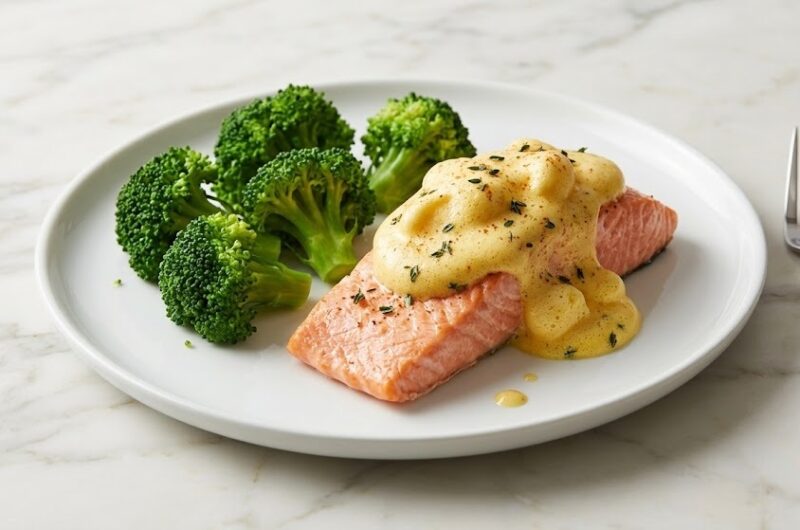
Classic Hollandaise Sauce
Course: SauceCuisine: BritishDifficulty: Medium4
servings5
minutes10
minutes15
minutes311
kcal15
minutesA rich, silky classic hollandaise made with egg yolks, butter, lemon, and a gentle bain-marie. Perfect for eggs Benedict, asparagus, or salmon.
Ingredients
3 large egg yolks
150g unsalted butter
1 tbsp lemon juice (plus more to taste)
1 tsp white wine vinegar (or tarragon vinegar)
1 tbsp water
1/4 tsp fine salt (to taste)
A pinch of white pepper
A pinch of cayenne pepper (optional)
Directions
- Melt the butter gently and keep it warm, not hot.
- Set a heatproof bowl over barely simmering water (don’t let the bowl touch the water).
- Whisk egg yolks, vinegar, and water until pale and slightly thickened.
- Whisk constantly over gentle heat until the mixture thickens to a light ribbon.
- Remove from heat and slowly whisk in warm butter in a thin stream until glossy and thick.
- Season with lemon juice, salt, pepper, and cayenne. Adjust thickness with a teaspoon of warm water if needed.
- Serve immediately, or keep warm for up to 30 minutes over warm (not hot) water.
Notes
- Keep the heat low. If the yolks get too hot they can scramble and the sauce can split.
- If the sauce thickens too much, whisk in warm water 1 tsp at a time.
- If it splits, start with 1 fresh yolk in a clean bowl and whisk the split sauce in slowly to re-emulsify.